Blog
Steel Cable Coating Options Explained: What to Choose for Your Project
May 26, 2026

Steel Cable coating options vary widely in their protective qualities, material composition, and suitability for different environments, and the wrong choice can lead to premature corrosion, mechanical failure, or unnecessary replacement costs.
The most common options include hot-dip galvanized, vinyl-coated, nylon-coated, black-coated, and stainless steel, each with distinct performance characteristics suited to specific applications and exposure conditions.
This article breaks down how each coating works, where it performs best, and the trade-offs to consider before specifying a cable for your project.
Why Steel Cable Coating Matters
A steel cable coating is both a surface finish and a functional component that determines how well a cable withstands its operating environment over time. Without appropriate protection, steel cable is vulnerable to oxidation, moisture infiltration, and abrasion, all of which shorten service life and compromise load-bearing integrity.
Choosing the wrong coating creates real consequences. A coating that cannot withstand moisture exposure will deteriorate, allowing corrosion to take hold in the underlying wire strands. A polymer coating not rated for sheave use will crack or strip under repeated bending, making it unsuitable for working cable applications.
The key factors to weigh when selecting a coating include:
- Environment: Is the cable installed indoors, outdoors, in a marine environment, or in a chemically aggressive setting?
- Application type: Is the cable static (rigging, display) or working (running over sheaves, gym equipment)?
- Load requirements: Does the application have specific strength-to-diameter requirements?
- Aesthetics: Does the installation require the cable to blend into an architectural context?
Hot-Dip Galvanized Steel Cable

Hot-dip galvanized cable is the baseline for corrosion protection in steel cable. The galvanizing process involves drawing individual wires through a bath of molten zinc before the cable is formed. This produces a thick zinc layer that bonds metallurgically to the steel surface, providing substantially more protection than the electro-galvanized (zinc-plated) alternative.
The difference in zinc thickness is significant. As noted in Fehr Bros’ comparison of electro-galvanized vs hot-dip galvanized coatings, hot-dip galvanized coatings are typically 5 to 10 times thicker than their electro-galvanized counterparts. That additional thickness translates directly to longer service life in demanding environments.
Best for: Outdoor installations, freshwater environments, high-moisture industrial settings, and general-purpose use where reliable corrosion protection is required.
Trade-offs: The surface finish is rougher than coated or stainless alternatives. For applications that require aesthetic refinement or a polymer outer layer, galvanized cable is often used as a base for a secondary coating.
Vinyl Coated Steel Cable
Vinyl coating is a polymer layer applied over a hot-dip galvanized steel core. It provides a flexible, strippable outer layer that adds abrasion resistance and surface protection while making the cable easier to handle and cut to length. Vinyl-coated cables are available in multiple colors, which makes them well-suited for consumer-facing and light commercial applications.
Common applications include: Security cables, lock cable systems, animal runs, clotheslines, and display cables.
Trade-offs: Vinyl coating is not suitable for working cable applications that run over sheaves, as it is not hard enough to withstand the repeated mechanical stress of bending over a pulley. Over time, the polymer layer can also obscure the condition of the underlying cable, making inspection more difficult. Vinyl is not appropriate for high-heat environments.
Nylon Coated Steel Cable
Nylon is a harder, more durable polymer than vinyl and is the correct choice when a coated cable needs to function in a working application. Unlike vinyl, nylon coating is designed to handle repeated bending over sheaves without cracking or stripping. This makes it suitable for applications where the cable is in regular motion rather than static tension.
Common applications include: Gym equipment cables, weight machine systems, and other working cable setups where the coating must hold up under repeated mechanical stress.
Trade-offs: Nylon is less flexible than vinyl and carries a higher material cost. For static applications or light-duty installations, the added durability may not be necessary.
Black Coated Steel Cable
Black coated cable is a distinct product category that uses an electrophoretic coating (e-coat) applied over a hot-dip galvanized steel core. The e-coat process deposits a uniform, flat black finish that bonds tightly to the galvanized surface. Unlike vinyl or nylon coatings, the e-coat will not flake, peel, or crack under normal conditions.
Because the e-coat is applied over hot-dip galvanized steel, the cable maintains corrosion resistance for both indoor and outdoor use. Swage sleeves can be applied directly over the coating without compromising the finish or the terminal connection.
Common applications include: Cable railing systems, architectural installations, stage rigging (including lighting, sound, and scenery flying), and any application where the cable should visually recede rather than stand out.
Trade-offs: The e-coat finish is primarily aesthetic in its function. In highly aggressive corrosive environments, such as saltwater coastal installations or chemical processing settings, stainless steel cable may offer a more appropriate level of protection.
Stainless Steel Cable
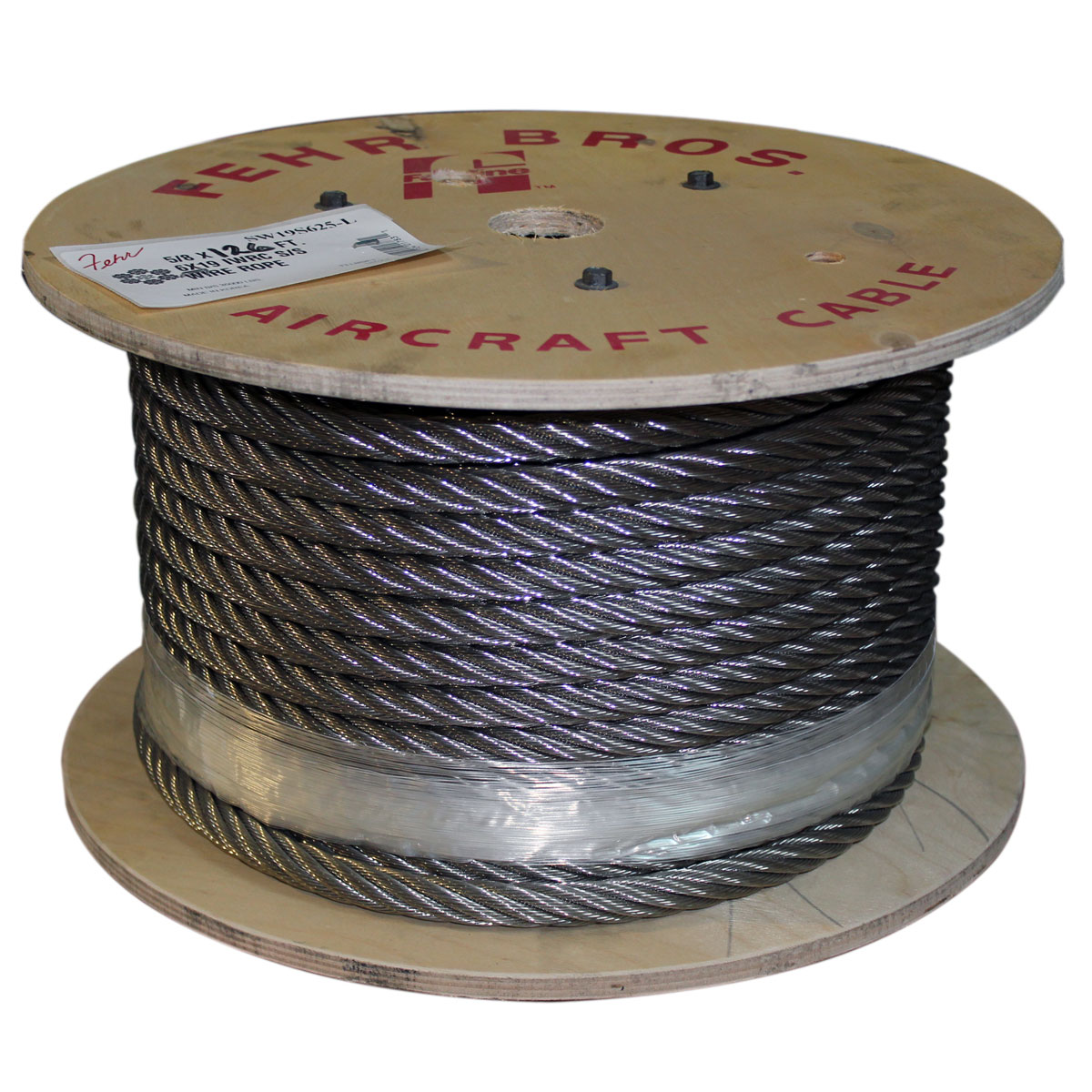
Unlike coated alternatives, stainless steel cable achieves corrosion resistance through its alloy composition rather than an applied layer. The primary alloying element is chromium, which forms a passive oxide layer on the surface that provides inherent protection against moisture, salt, and oxidation. Type 304 stainless steel is the most widely used grade for cable applications. Type 316 stainless steel is a highly versatile, durable material designed for use in harsh, corrosive environments that may contain chlorine, acids, and other chemicals.
Because there is no applied layer to degrade or peel, stainless steel cable maintains its appearance and protective properties throughout its service life. It is available in both 7×7 and 7×19 strand configurations, offering flexibility and strength suitable for a wide range of industrial, marine, and architectural applications.
Common applications include: Marine and coastal environments, agricultural use, food processing settings, and any application involving continuous exposure to moisture or corrosive conditions.
Trade-offs: Stainless steel carries a higher material cost than galvanized or polymer-coated alternatives. For applications in mild or controlled environments, the premium may not be justified.
Choosing the Right Steel Cable Coating for Your Application
With several coating types available, the decision comes down to matching the cable to the conditions it will face.
The environment is usually the first filter. Vinyl-coated cable is often sufficient for indoor or low-exposure settings. As exposure increases, hot-dip galvanized or black-coated cable provides more reliable corrosion protection without the cost premium of stainless steel. In marine, coastal, or high-moisture environments, stainless steel is generally the more appropriate choice.
Application requirements narrow the selection further. Black-coated cable is well-suited to projects where aesthetics matter, such as cable railing, architectural installations, and stage rigging. Nylon-coated cable is typically the right choice when durability is the priority, including gym equipment and sheave systems. Hot-dip galvanized cable covers most general outdoor and industrial needs at a controlled cost, while stainless steel is worth considering when maximum corrosion resistance is the primary requirement.
For applications with specific load ratings, diameter requirements, or custom assembly needs, Fehr Bros product specialists can help identify the right cable specification. These variables affect coating selection and are worth reviewing with a specialist before finalizing an order.
The Right Steel Cable Coating Option Starts with the Right Information
Cable coating options differ significantly in their protection levels, mechanical suitability, surface finish, and cost. Matching the coating to the environment and application type is what prevents premature failure and unnecessary expense. A coating rated for static display use will not hold up on a working cable system. A coating optimized for indoor aesthetics may not survive a coastal installation.
As a trusted steel cable supplier, Fehr Bros offers a range of coated and uncoated products to support industrial, commercial, and architectural applications. Log in to browse the full selection online or contact the product specialist team to discuss your specific project requirements.