Blog
Why Choose Stainless Steel Shackles for Marine and Outdoor Projects
March 26, 2026
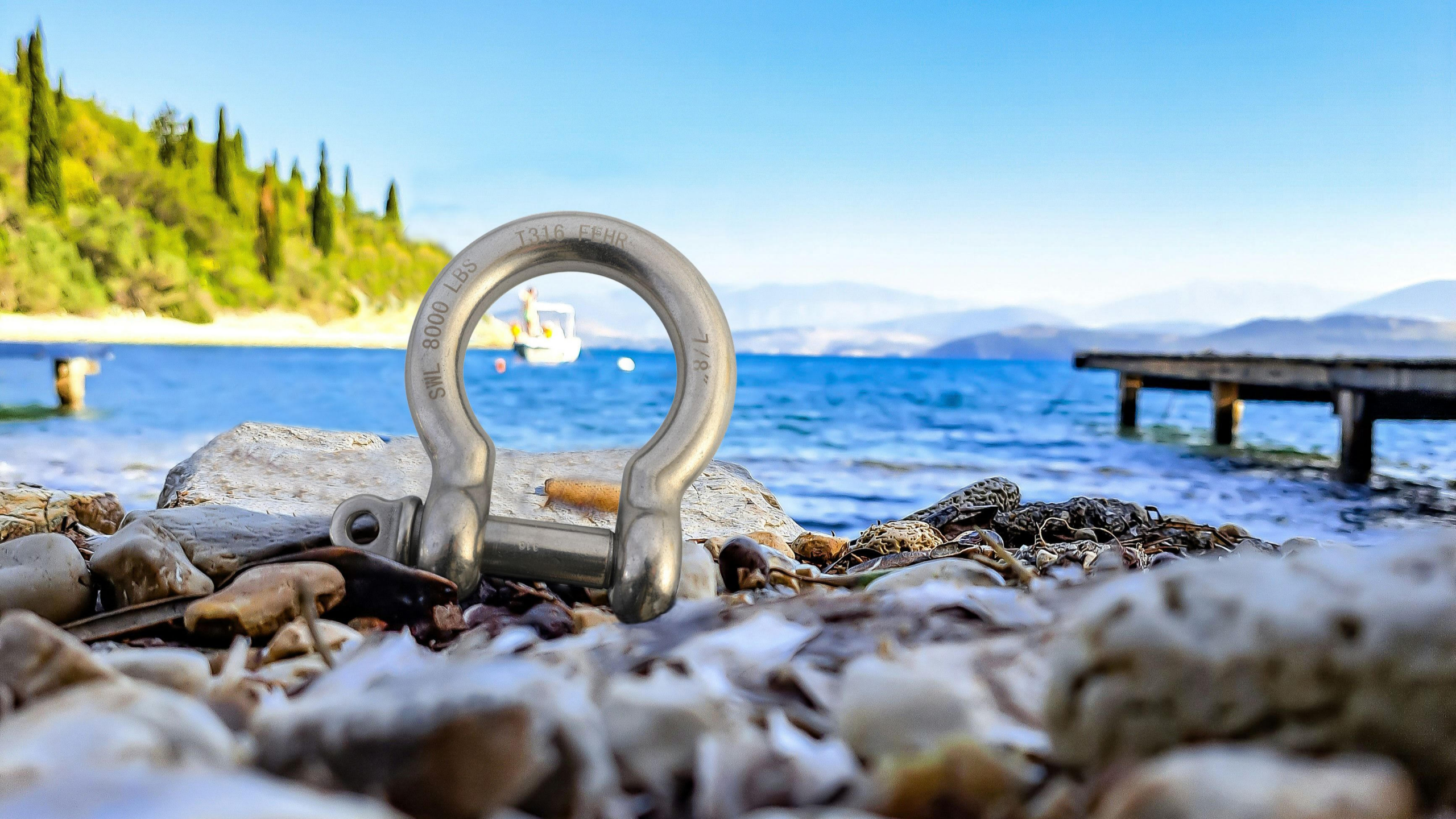
Selecting the right rigging hardware is one of the most consequential decisions professionals make when building or maintaining systems exposed to the elements. For anyone working in marine, coastal, or outdoor environments, the question comes up consistently: Why choose stainless steel shackles over other available materials? The answer comes down to how these components hold up where corrosion, moisture, and mechanical stress are constant factors.
Shackles are load-bearing connectors used across rigging systems, lifting assemblies, and securing applications. Two configurations dominate marine and outdoor use: bow shackles, which have a rounded body that accommodates multi-directional loading, and straight “D” shackles, which feature a narrower profile suited to in-line connections. Both styles face the same environmental pressures outdoors — and both perform significantly better in stainless steel than in standard carbon steel under severe conditions.
This article explains how stainless steel shackles perform under demanding conditions, where bow and “D” shackles are most commonly applied, and what to consider when selecting the right option for a project.
Understanding Shackles in Rigging and Marine Applications
A shackle consists of two primary components: a U-shaped body and a removable pin that closes the connection. The pin may be a screw pin, a bolt-type pin, or a safety pin, depending on the application. Together, these components form a removable link that connects chains, wire rope, lifting slings, synthetic rigging, or other hardware within a load-bearing system.
In marine and industrial contexts, shackles are used wherever a secure, removable connection is needed between rigging components. Stainless steel shackles appear in dock hardware, anchor systems, sailboat rigging, offshore equipment, and outdoor structural installations.
The two most widely used configurations in these environments are:
- Stainless steel screw pin bow shackles, which feature a wider, rounded body that can accept loads from multiple directions and accommodate more than one rigging component at a time. They are frequently used in anchor systems, mooring setups, and rigging assemblies where the load direction may shift.
- Stainless steel straight “D” shackles, which have a narrower body designed for in-line, straight-line loads. Their profile makes them a common choice for connecting wire rope ends, securing rigging to a fixed point, or linking components that require a tight, compact connection.
Understanding which configuration fits a given load path is the starting point for any shackle selection decision.
Why Choose Stainless Steel Shackles for Harsh Environments
Carbon steel shackles are widely used in dry, controlled industrial environments, but they have a significant limitation outdoors: they corrode. Exposure to moisture, rain, and especially saltwater accelerates rust formation, weakening the structural integrity of the shackle over time. In marine environments, that degradation can happen faster than expected.
Stainless steel addresses this problem at the material level. The alloys used in industrial stainless steel shackles — most commonly 304 and 316 stainless steel — contain chromium, which reacts with oxygen to form a stable, self-repairing oxide layer on the surface. According to the World Stainless Association, stainless steel develops a chromium-rich passive oxide film that forms naturally on its surface and is self-healing, meaning it reforms when damaged, without any coating or additional treatment required.
For bow shackles and straight “D” shackles used in marine hardware assemblies, this translates to more reliable long-term performance with less maintenance intervention. The hardware maintains its structural integrity under conditions where a carbon-steel equivalent would require frequent inspection, surface treatment, or replacement.
Key Properties That Support Long-Term Performance
Three material characteristics make stainless steel shackles well-suited to outdoor and marine applications:
- Chromium-based corrosion protection. The chromium content in 304 and 316 stainless steel alloys forms the passive oxide layer that resists rust in moisture-heavy environments. Grade 316, which includes molybdenum, offers additional resistance in chloride-rich environments such as coastal and offshore settings.
- Consistent structural integrity over time. Stainless steel maintains its tensile strength and load-bearing capacity without the surface degradation that shortens the service life of uncoated or lightly coated carbon steel hardware.
- Lower maintenance burden in exposed installations. Because the corrosion resistance is intrinsic to the material rather than a surface coating, stainless steel shackles do not rely on paint, plating, or galvanizing that can wear away. This is particularly relevant for dock hardware, boat rigging, and outdoor structural connections that are difficult to inspect or service frequently.
Corrosion Protection and Stainless Steel’s Resistance
The corrosion resistance of stainless steel is a passive, continuous process. When the chromium content in the alloy reaches approximately 10.5% by mass, it enables the formation of that protective oxide layer. According to the British Stainless Steel Association, this passive film is invisible, adherent, and self-renewing, which is what differentiates stainless steel from coated alternatives.
For stainless steel shackles used in saltwater and high-humidity environments, the grade of stainless steel matters. Grade 304 performs well in freshwater and general outdoor exposure. Grade 316, with its added molybdenum content (typically 2-3%), is the standard choice for marine hardware because it resists chloride-induced corrosion more effectively. Chlorides, present in sea spray, coastal air, and saltwater, are the primary corrosive threat to marine rigging hardware.
Galvanized carbon steel shackles offer some corrosion protection, but the zinc coating is sacrificial. Over time, particularly in saltwater environments, the coating is consumed, and the base metal becomes vulnerable. Stainless steel does not have this limitation. The passive layer is not consumed; it reforms. That distinction is why stainless steel bow shackles and straight “D” shackles are preferred for long-term outdoor and marine installations where periodic recoating or replacement is not practical.
Selecting the Right Stainless Steel Shackles for Your Project
Shackle selection involves more than choosing between bow and “D” configurations. Several practical factors determine whether a shackle will perform reliably in a given application.
Load direction is the first consideration. Bow shackles, sometimes called anchor shackles, can handle loads from multiple angles without concentrating stress at a single point. Stainless steel wide “D” shackles are designed for in-line loading only; side loading can reduce their effective capacity significantly. Misapplying a shackle style is one of the more common causes of hardware failure in rigging systems.
Working load limit (WLL) must be matched to the application. Shackles are rated by their WLL, which represents the maximum load they are designed to carry under normal working conditions. This figure should never be confused with the breaking strength. Rigging professionals typically apply a safety factor when selecting hardware, meaning the shackle’s WLL should comfortably exceed the expected working load.
Size compatibility affects how the shackle integrates with adjacent components. The shackle pin diameter must be compatible with the chain links, wire rope fittings, or other hardware it connects to. A poorly fitting shackle introduces stress concentrations that can compromise the connection.
When sourcing shackles for marine or outdoor projects, working with a supplier that carries industrial-grade stainless steel hardware ensures the products meet appropriate standards for strength and material composition.
Reliable Rigging Hardware from Fehr Bros.
Fehr Bros. has supplied industrial rigging hardware for decades, serving contractors, procurement teams, and operations professionals who need dependable components backed by sourcing experience. Their inventory includes stainless steel bow shackles and straight “D” shackles designed for corrosion resistance and long-term performance in demanding environments.
For professionals selecting hardware for marine, outdoor, or industrial rigging applications, working with a supplier that understands the technical requirements of the application matters. Fehr Bros. product specialists can help identify the right shackle configuration, grade, and size for a specific project. Reach out through their contact page for guidance.
Choosing Stainless Steel Shackles for Long-Term Performance
The case for stainless steel shackles in marine and outdoor projects is grounded in material science and field performance. Corrosion resistance, structural durability, and lower maintenance requirements make them a practical choice for any installation where hardware is exposed to moisture, salt, or sustained outdoor conditions.
Bow shackles and straight “D” shackles each serve distinct functions within rigging systems, and understanding that distinction is part of selecting hardware that performs as expected over the long term. The question of why choose stainless steel shackles ultimately comes down to reliability. In other words, the confidence that the connection will hold under load and hold up over time, without requiring constant attention.Explore Fehr Bros.’ full selection of shackles for marine, outdoor, and industrial applications, or contact their product specialists to get guidance on your next project.